

2026 Honda Civic vs Toyota Corolla in Zanesville, OH
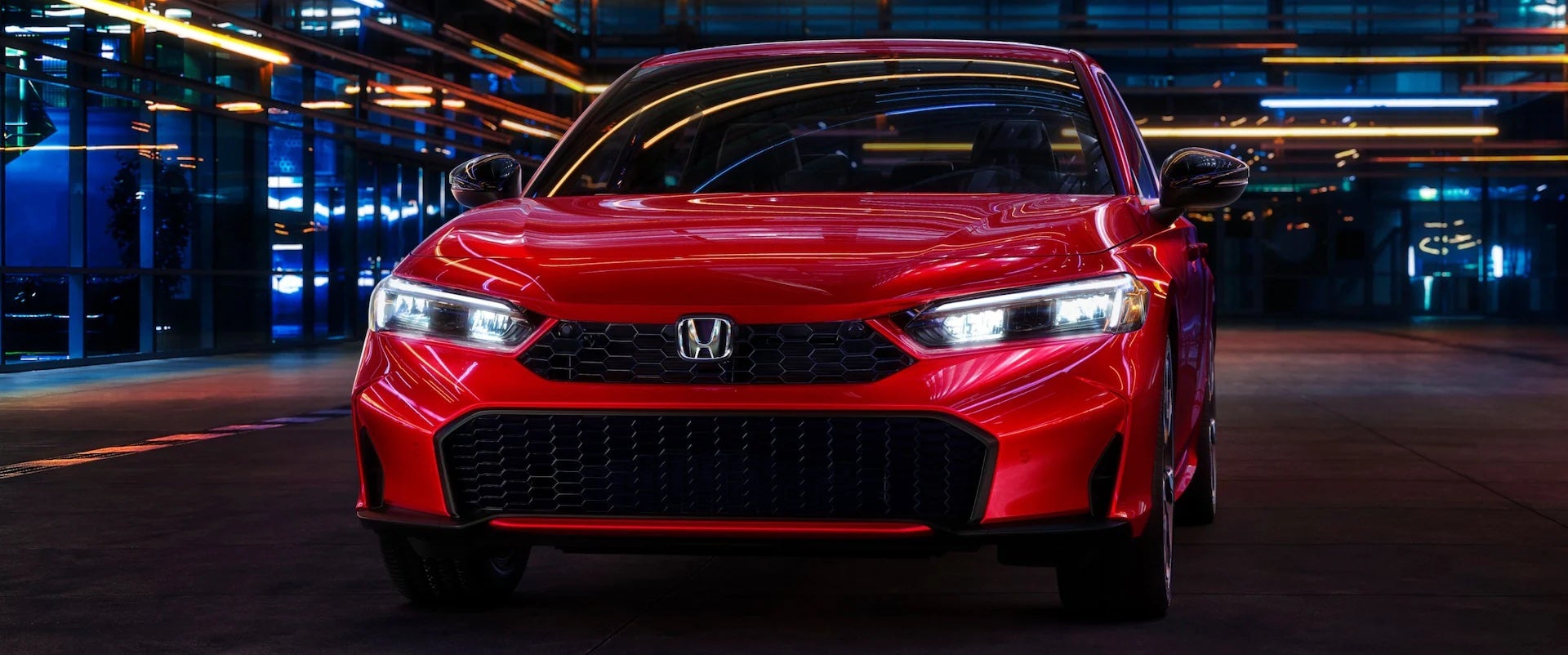
The Honda Civic and Toyota Corolla have a long-standing rivalry in the new car market. While both sedans offer reliability for Ohio drivers, our team knows the 2026 Honda Civic is the clear standout, and we’re going to prove it to you.
Topics we’ll focus on include:
-
Performance – The Honda Civic delivers superior fuel economy for gas models and stronger performance for hybrid trims.
-
Safety – Honda’s Civic offers proven confidence, with a comprehensive safety suite.
-
Spaciousness – Civic drivers cruise comfortably with higher passenger and cargo volume.
Visit Zanesville Honda, conveniently located near Newark and Cambridge, to explore our new Honda models and used vehicles!

Engine Performance & Fuel Efficiency
Now that we’re off to the races, let’s start by exploring the power and efficiency of the new cars.
Starting with gas-powered models, the Toyota Corolla takes a slight lead with up to 169 available horsepower. That said, the Honda Civic trades a bit of power for added efficiency, offering a higher combined fuel economy of up to 36 MPG.
When it comes to hybrid performance, the Honda outpaces the Toyota, delivering up to 200 horsepower, while the Corolla is limited to just 150. Regarding fuel economy, the Toyota posts stronger combined MPG figures, while the Honda excels in highway driving.
Pop the hood and see which new car is right for your next Cambridge journey!
2026 Honda Civic Sedan – Performance Specs
-
Honda Civic (Gas)
-
Engine: 2.0-liter Atkinson in-line 4-cylinder
-
Horsepower: 150 hp
-
Torque: 133 lb-ft
-
MPG: 32 city / 41 highway / 36 combined
-
Honda Civic (Hybrid)
-
Engine: 2.0-liter Atkinson in-line 4-cylinder + 2 electric motors
-
Horsepower: 200 hp
-
Torque: 134 lb-ft
-
MPG: 50 city / 47 highway / 49 combined
2026 Toyota Corolla – Performance Specs
-
Toyota Corolla (Gas)
-
Engine: 2.0-liter in-line 4-cylinder
-
Horsepower: 169 hp
-
Torque: 151 lb-ft
-
MPG: 32 city / 41 highway / 35 combined
-
Toyota Corolla (Hybrid)
-
Engine: Hybrid-assisted 2.0-liter in-line 4-cylinder
-
Horsepower: 138 hp
-
Torque: 105 lb-ft
-
MPG: 50 city / 46 highway / 50 combined

Safety & Driver-Assistance
Honda understands that enjoyable driving starts with having confidence in your vehicle.
That’s why each new Civic comes standard with Honda Sensing®, the manufacturer’s elite safety suite. The standard safety package includes a range of features, including everything from essential collision avoidance systems to helpful vision-enhancement features.
See how Honda Sensing® can promote peace of mind on your next Newark trip!
2026 Honda Civic Sedan – Standard Safety Features
-
Forward Collision Warning
-
Lane Departure Warning
-
Collision Mitigation Braking System™
-
Road Departure Mitigation System
-
Lane Keeping Assist System
-
Adaptive Cruise Control with Low-Speed Follow
-
Traffic Sign Recognition System
-
Traffic Jam Assist
-
Auto High-Beam Headlights
2026 Honda Civic Sedan – Standard Safety Features
-
Pre-Collision System with Pedestrian Detection
-
Full-Speed Range Dynamic Radar Cruise Control
-
Lane Departure Alert with Steering Assist
-
Lane Tracing Assist
-
Road Sign Assist
-
Automatic High Beams
-
Proactive Driving Assist

Interior Size & Dimensions
The 2026 Honda Civic takes a big lead in interior space!
With the new Honda Civic, you can stretch out comfortably with a whopping 99 cu ft of passenger volume. Inside, there’s plenty of space for both drivers and passengers, with 42.3 inches of legroom up front and 37.4 inches in the back.
With only 88.6 cu ft of passenger volume, families may feel cramped inside the 2026 Corolla. The new Toyota car also offers significantly less second-row legroom, with only 34.8 inches.
Explore the interior dimensions of both new cars, and get ready for your next big adventure in Zanesville!
2026 Honda Civic Sedan – Interior Dimensions
-
Passenger Volume: 99.0 cu ft
-
Front Headroom: 39.3 in
-
Rear Headroom: 37.1 in
-
Front Legroom: 42.3 in
-
Rear Legroom: 37.4 in
-
Front Shoulder Room: 57.0 in
-
Rear Shoulder Room: 56.0 in
-
Front Hiproom: 54.3 in
-
Rear Hiproom: 48.9 in
-
Cargo / Trunk Volume: 14.8 cu ft
2026 Toyota Corolla – Interior Dimensions
-
Passenger Volume: 88.6 cu ft
-
Front Headroom: 38.3 in
-
Rear Headroom: 37.1 in
-
Front Legroom: 42.0 in
-
Rear Legroom: 34.8 in
-
Front Shoulder Room: 54.0 in
-
Rear Shoulder Room: 51.7 in
-
Front Hiproom: 53.9 in
-
Rear Hiproom: 51.3 in
-
Cargo / Trunk Volume: 13.1 cu ft

Frequently Asked Questions
Still have questions about the 2026 Honda Civic and the Toyota Corolla? Zanesville Honda has your back!
We’re going to take a deeper look by answering some top questions about the two new cars. We’ll explore everything from their engine efficiency to their technology capabilities to help you make the best decision.
When we’re done, you’ll be one step closer to finding the best compact car for your Cambridge commutes!
Which has better fuel economy, the 2026 Civic or the 2026 Corolla?
The 2026 Honda Civic and Toyota Corolla offer comparable fuel efficiency. The Civic delivers superior fuel economy for gas models, while the Corolla takes a lead in hybrid efficiency.
-
MPG - Gas Trims
-
Honda Civic: 32 city / 41 highway / 36 combined
-
Toyota Corolla: 32 city / 41 highway / 35 combined
-
MPG - Hybrid Trims
-
Honda Civic: 50 city / 47 highway / 49 combined
-
Toyota Corolla: 50 city / 46 highway / 50 combined
How do the engine options compare between the 2026 Honda Civic and the Toyota Corolla?
The Honda Civic takes a significant lead in hybrid horsepower, while the Corolla has a slight edge in gas-powered performance.
-
Horsepower - Gas Trims
-
Honda Civic: 150 hp
-
Toyota Corolla: 169 hp
-
Horsepower - Hybrid Trims
-
Honda Civic: 200 hp
-
Toyota Corolla: 138 hp
Which is the safer option between the 2026 Civic Sedan and the Toyota Corolla?
While many factors influence a vehicle’s overall safety, the Honda Civic stands out with its proven structural design and comprehensive Honda Sensing® safety suite.
Which sedan is more spacious inside, the Civic or the Corolla?
The 2026 Honda Civic is much more spacious, offering 99.0 cu ft of passenger volume, while the Corolla is limited to just 88.6 cu ft.
Which offers more value, the 2026 Honda Civic or the 2026 Toyota Corolla?
Several factors can affect a vehicle’s overall value. However, the 2026 Civic delivers trusted results, earning accolades such as the 2025 North American Car of the Year™ and a spot on U.S. News & World Report’s Best Compact Cars for the Money list.
How do the audio and multimedia systems compare between the two?
The 2026 Corolla features a slightly larger infotainment screen. However, the new Civic offers comprehensive technology, such as standard Google built-in™ and an available 12-speaker Bose® audio system.

Your Victory Lap Awaits at Zanesville Honda!
The 2026 Honda Civic takes the gold with superior performance, safety, and spaciousness!
Ready for your test drive? Call (740) 454-2512 or visit us at 3240 Maple Ave, Zanesville, Ohio 43701.
At Zanesville Honda, we take pride in our premium selection of new Honda cars, trucks, and SUVs. We also offer a dependable used vehicle inventory, featuring a variety of manufacturers. When you find your dream Honda, visit our finance department to apply for credit and explore your trade options.
Thank you for choosing us as your trusted car dealership, proudly serving drivers in the Zanesville, Newark, and Cambridge areas.
DISCLAIMERS:
MSRP excluding tax, license, registration, $1,195 destination charge, and accessories. Dealer prices may vary. MSRP does not include $455 charge for premium colors.
150 hp @ 6400 rpm (SAE net)
Apple CarPlay is a registered trademark of Apple Inc.
Android and Android Auto are trademarks of Google LLC. Compatible Android phone and compatible active data plan required.
CMBS cannot detect all objects ahead and may not detect a given object; accuracy will vary based on weather, speed, and other factors. System operation affected by extreme interior heat. System designed to mitigate crash forces. Driver remains responsible for safely operating vehicle and avoiding collisions.
Road Departure Mitigation only alerts the driver when lane drift is detected without a turn signal in use and can apply mild steering torque to assist driver in maintaining proper lane position or to slow the vehicle's departure from a detected lane. RDM may not detect all lane markings or lane departures; accuracy will vary based on weather, speed, and road condition. System operation affected by extreme interior heat. Driver remains responsible for safely operating vehicle and avoiding collisions.
Always visually confirm that it is safe to drive before backing up; the rearview camera display does not provide complete information about all conditions and objects at the rear of your vehicle.
ACC with Low-Speed Follow cannot detect all objects ahead and may not detect a given object; accuracy will vary based on weather, speed, and other factors. ACC should not be used in heavy traffic, poor weather, or on winding roads. Driver remains responsible for safely operating vehicle and avoiding collisions.
LKAS with TJA only assists driver in maintaining proper lane position when lane markings are identified without a turn signal in use and can only apply mild steering torque to assist. The system may not detect all lane markings; accuracy will vary based on weather, speed, and road condition. System operation affected by extreme interior heat. Driver remains responsible for safely operating vehicle and avoiding collisions.
TSR cannot detect all traffic signs, may misidentify certain signs and does not include any braking or speed control functions. Accuracy will vary based on weather and other factors. System operation affected by extreme interior heat. Driver remains responsible for complying with all traffic regulations.
Total system horsepower (ISO net) as measured by the peak, concurrent output of the two electric motors and gasoline engine.
Walk Away Auto Lock® will only function when the key fob is moved eight feet from the vehicle after all doors have been closed.
The systems are not a substitute for your own visual assessment before changing lanes or backing up, and may not detect all objects, or provide complete information about conditions, behind or to the side of the vehicle. System accuracy will vary based on weather, size of object, and speed. Driver remains responsible for safely operating vehicle and avoiding collisions.
The Bluetooth® word mark and logos are owned by Bluetooth SIG, Inc. and any such use of such marks by Honda Motor Co., Ltd. is under license.
32 city/41 highway/36 combined mpg rating for LX. 31 city/39 highway/34 combined mpg rating for Sport. 50 city/47 highway/49 combined mpg rating for Sport Hybrid and Sport Touring Hybrid. Based on 2026 EPA mileage ratings. Use for comparison purposes only. Your mileage will vary depending on how you drive and maintain your vehicle, driving conditions, battery-pack age/condition (hybrid trims) and other factors.
133 lb.-ft. @ 4,000-5,000 rpm (SAE net) for LX and Sport; 134 lb.-ft. @ 4,500 rpm (SAE net) for Sport FHEV and Sport Touring FHEV.
Based on SAE J1100 cargo volume measurement standard plus, where applicable, floor space between seating rows and seats in their forward-most and upright position.
FCW cannot detect all objects ahead and may not detect a given object; accuracy will vary based on weather, speed and other factors. System operation affected by extreme interior heat. FCW does not include a braking function. Driver remains responsible for safely operating vehicle and avoiding collisions.
LDW only alerts drivers when lane drift is detected without a turn signal in use. LDW may not detect all lane markings or lane departures; accuracy will vary based on weather, speed and road condition. System operation affected by extreme interior heat. Driver remains responsible for safely operating vehicle and avoiding collisions.
CMBS cannot detect all objects ahead and may not detect a given object; accuracy will vary based on weather, speed and other factors. System operation affected by extreme interior heat. System designed to mitigate crash forces. Driver remains responsible for safely operating vehicle and avoiding collisions.
Road Departure Mitigation only alerts drivers when lane drift is detected without a turn signal in use and can apply mild steering torque to assist driver in maintaining proper lane position and/or brake pressure to slow the vehicle's departure from a detected lane. RDM may not detect all lane markings or lane departures; accuracy will vary based on weather, speed and road condition. System operation affected by extreme interior heat. Driver remains responsible for safely operating vehicle and avoiding collisions.
LKAS only assists driver in maintaining proper lane position when lane markings are identified without a turn signal in use and can only apply mild steering torque to assist. LKAS may not detect all lane markings; accuracy will vary based on weather, speed and road condition. System operation affected by extreme interior heat. Driver remains responsible for safely operating vehicle and avoiding collisions.
TSR cannot detect all traffic signs and may misidentify certain signs. Accuracy will vary based on weather and other factors. System operation affected by extreme interior heat. Driver remains responsible for complying with all traffic regulations.